Pediatric Dental Sealants in Pompano Beach, FL
The back teeth have natural pits and grooves where food and plaque can collect, making molars more prone to cavities. At Izzy’s Kidz Dentistry, pediatric dental sealants in Pompano Beach, FL add a thin protective coating over these chewing surfaces to help reduce cavity risk. Sealants are commonly used on newly erupted permanent molars and, when appropriate, primary molars. We evaluate your child’s teeth, cavity risk, and dental development to determine which teeth may benefit from sealants and explain the recommendation clearly to parents.
Extra Protection for Hard-to-Clean Back Teeth
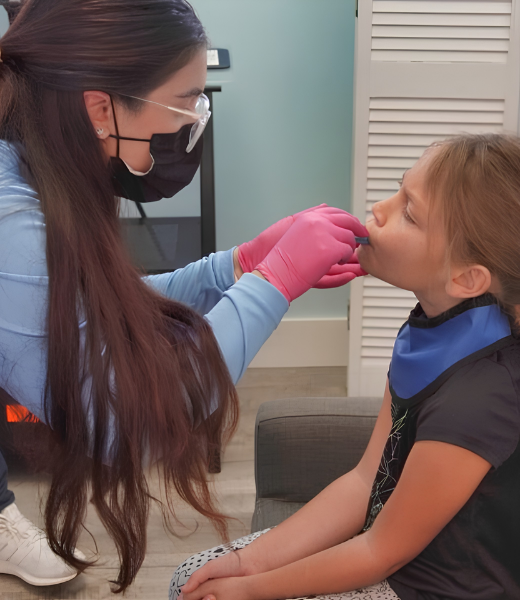
Molars are built for chewing, so their surfaces are not completely smooth. They contain natural pits and fissures that can be narrow and deep. A toothbrush may clean the top of the tooth well but still have difficulty reaching the bottom of every groove. When food particles and bacteria remain in these areas, the tooth can become more vulnerable to decay.
A dental sealant covers these grooves with a protective material that bonds to the chewing surface. Once the sealant is in place, it creates a barrier over areas where cavities commonly begin. Sealants are often considered for permanent molars as they come in, but they may also be appropriate for certain primary molars. The decision depends on the individual tooth, its shape, and your child’s risk of developing cavities.

100%
Flexible
Why Choose Izzy's Kidz Dentistry?
Sealants work best when the right teeth are selected and the material is carefully placed. At Izzy’s Kidz Dentistry, we look closely at your child’s molars before deciding whether a sealant is appropriate.
Child Focused Evaluation
Sealant placement is performed on the outside surface of the tooth and does not involve preparing the tooth like a traditional filling. Our team explains each step so children know what is happening.
Careful Tooth Preparation
The chewing surface needs to be properly prepared so the sealant can bond to the tooth. We take the time to keep the area clean and dry during placement.
Comfortable Treatment
Sealant placement is performed on the outside surface of the tooth and does not involve preparing the tooth like a traditional filling. Our team explains each step so children know what is happening.
Ongoing Sealant Checks
Sealants can wear over time. During future visits, we can check whether the protective material is still covering the grooves and determine whether an area needs attention.
Protecting the Teeth That Need It Most
Dr. Izzy understands that two children’s molars can look very different. One child may have shallow grooves that are easy to keep clean, while another may have deep pits and fissures where plaque and food collect more easily. He evaluates the tooth itself rather than assuming every child needs the same treatment.
When sealants are appropriate, Dr. Izzy explains which teeth may benefit and why. He also considers whether a molar has fully erupted, whether there are signs of decay, and whether the tooth can be properly isolated for sealant placement. This individual approach helps parents understand the reason behind the recommendation rather than viewing sealants as an automatic treatment.
Benefits of Pediatric Dental Sealants
The chewing surfaces of the back teeth can be difficult for children to clean thoroughly. Sealants add protection to these cavity-prone areas without changing the natural function of the tooth. Research reviewed by the CDC, ADA, and AAPD supports sealants as an effective way to reduce decay in molars.
Protects Deep Tooth Grooves
Sealant material flows over pits and fissures on the chewing surface, creating a barrier between the tooth and the food or bacteria that can become trapped there.
Helps Reduce Cavity Risk
By covering vulnerable areas of the molars, sealants can reduce the chance of decay beginning in these hard-to-clean surfaces. The CDC reports substantial cavity reduction in sealed back teeth.
Protects Newly Erupted Molars
Permanent molars can benefit from added protection after they come into the mouth, especially when their grooves are deep or the child has a greater risk of tooth decay.
What to Expect During Your Child's Dental Sealant Appointment
Placing a sealant is usually a straightforward process. No cavity needs to be drilled out when a sealant is being placed on a suitable tooth. The goal is to create a strong bond between the protective material and the chewing surface.
1
Checking the Tooth
We first examine the molar and its grooves. The dentist determines whether the tooth is a good candidate for a sealant and makes sure there is no condition that requires a different type of care.
2
Preparing the Surface
The material is hardened according to the type of sealant being used. We then check the surface and your child’s bite to make sure the sealant is properly placed.
3
Applying the Sealant
The sealant material is placed over the pits and fissures of the chewing surface. It flows into the small grooves that can be difficult to reach with a toothbrush.
4
Setting & Checking the Sealant
The material is hardened according to the type of sealant being used. We then check the surface and your child’s bite to make sure the sealant is properly placed.
What Parents Say About Izzy's Kidz Dentistry
Great place & amazing staff! It was our 1st. Visit to the dentist with our kid. They were super friendly and make us feel comfortable. The team was incredible and taking care of every detail. Dr. Izzy, is super professional and clear with our kid needs. So happy we found him to be the dentist of my kiddo.

Gypsi P.
first visit here and I honestly loved it! From the front desk to the nurse and doctor, everyone was super sweet and welcoming, which made me feel so comfortable as a new mom.
Dhariana L.
From scheduling to leaving our visit, every step felt kind, professional, and tailored to my child specifically. The atmosphere is clean and pleasant and the dentist and his wife helped my daughter feel very much a part of the experience. I also learned a few tips that we did not to help at home for her dental hygiene! After having found them, we will go no where else!
Allison W.
Frequently Asked Questions
What are dental sealants and how do they protect children's teeth?
Which teeth usually get dental sealants?
When should my child get dental sealants?
Does getting dental sealants hurt?
How long do dental sealants last?
Convenient Dental Sealant Care for Kids in Pompano Beach, FL
Dental sealants help protect the deep grooves of a child’s back teeth, where food, plaque, and bacteria can collect and cavities often begin. At Izzy’s Kidz Dentistry, we provide pediatric dental sealants for children whose molars may benefit from added protection. The sealant forms a thin protective layer over the chewing surface, covering pits and fissures that can be difficult to clean with a toothbrush. This added barrier can be especially useful as permanent molars come in and children are still developing consistent brushing habits.
We look at each tooth individually before recommending a sealant. Factors such as the depth of the grooves, the stage of tooth eruption, your child’s cavity history, and how easy the surface is to keep clean can all affect whether a sealant is appropriate. Our Pompano Beach office also welcomes families from Lighthouse Point, Deerfield Beach, Lauderdale-by-the-Sea, East Boca Raton, Coconut Creek, Coral Springs, and Imperial Point who are looking for practical cavity protection for their child’s molars. Explore our nearby service areas and choose a trusted local dental team for your family’s preventive, restorative, emergency dentistry, special needs dentistry, and pediatric frenectomy care.