
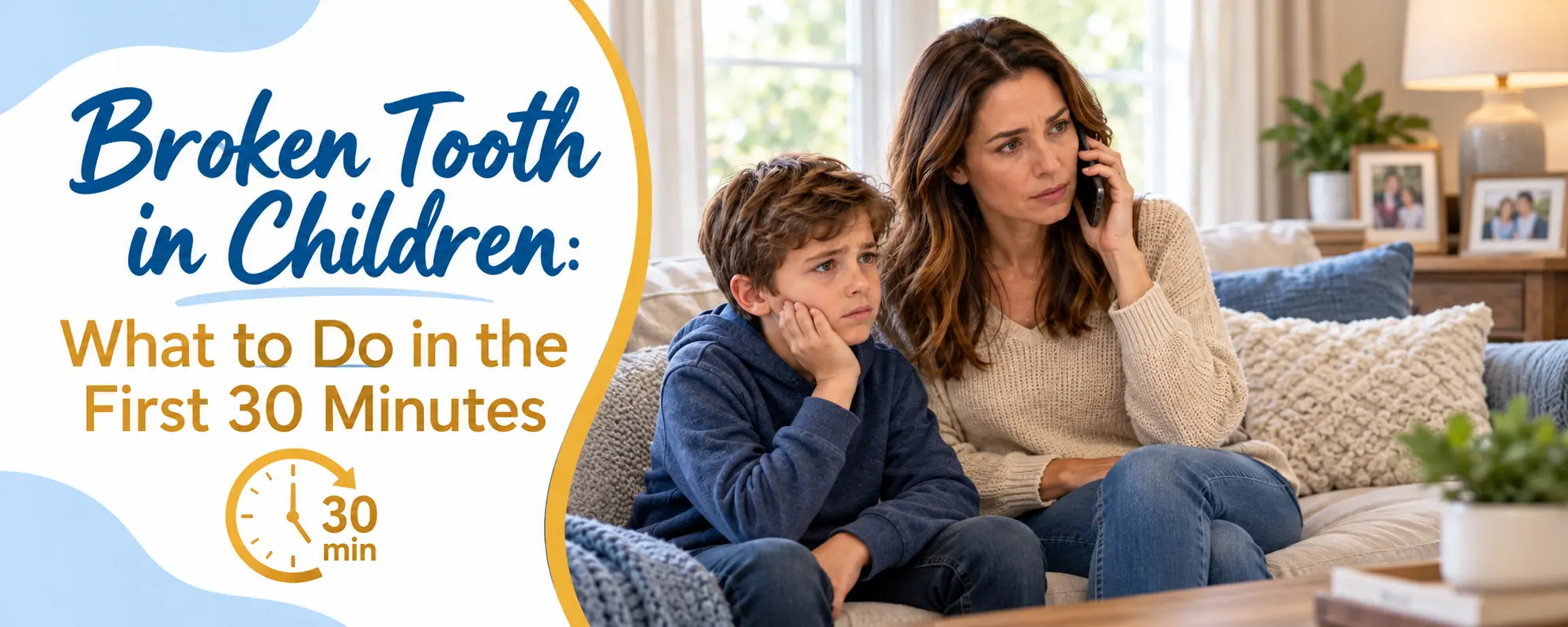
Seeing your child with a broken tooth can feel scary, especially after a fall, sports accident, or unexpected hit. The first few minutes matter because quick action can reduce discomfort and help protect the damaged tooth.
A broken tooth in children does not always mean the tooth needs major treatment, but it should be checked by a dentist to understand the damage. Knowing what to do immediately, what signs to watch for, and when to seek help can make the situation easier for both you and your child.
Emergency Steps After A Broken Tooth In Children
When a tooth injury happens, parents often panic and are unsure what step to take first. Following a simple timeline can help you stay calm and handle the situation correctly.
First Minutes: Check And Comfort Your Child
Start by helping your child sit down and stay calm. Check the mouth carefully to see where the damage happened and whether there is bleeding.
If there is blood, gently clean the area with water and use clean gauze or a cloth with light pressure. Avoid pressing directly on a painful tooth. Look for any broken tooth pieces and keep them in a clean container if you find them.
Next Steps: Protect The Damaged Tooth
After cleaning the area, avoid letting your child chew on the injured side. Soft foods and gentle mouth care can prevent additional irritation.
If the tooth feels sensitive, a cold compress placed on the outside of the cheek can help reduce swelling. Do not try to glue the broken piece back or fix the tooth at home.
Within 30 Minutes: Contact A Dentist
After the immediate steps, contact a dental office for guidance. Even a small chip can sometimes involve deeper damage that is not visible.
An emergency pediatric dentist can check whether your child needs immediate care or a scheduled visit. Quick evaluation is especially important if your child has pain, swelling, bleeding, or trouble biting.
For urgent dental injuries, parents can learn more about available emergency dental care for children and when professional support is needed.
Tooth Damage: Chipped Tooth Or Broken Tooth?
Not every tooth injury looks the same. Understanding the difference helps parents decide how quickly they should seek care.
A chipped tooth usually means a small piece of the tooth surface has broken away. It may happen from biting something hard, falling, or an accident during play.
A more serious broken tooth may involve a larger section of the tooth. Signs that need closer attention include:
- A large piece of tooth missing
- Ongoing pain or sensitivity
- A sharp edge cutting the tongue or cheek
- Changes in tooth position
- Swelling around the gums
Dr. Izzy helps children feel comfortable during dental visits by carefully checking injuries and guiding parents through the next steps based on the child’s situation.
Dental Emergency: When Should Parents Call?
Some tooth injuries can wait for a regular appointment, while others need faster attention. Parents should contact a dentist quickly if:
- Your child has strong tooth pain
- The tooth becomes loose after an accident
- Bleeding does not stop
- The tooth looks pushed out of place
- Your child has swelling around the mouth
- A permanent tooth is damaged
A dentist can determine whether your child needs simple monitoring, repair, or more involved tooth fracture treatment.
According to the American Academy of Pediatric Dentistry (AAPD), children’s tooth injuries should be evaluated carefully because the right care depends on the type of damage and the tooth involved.
Baby Tooth And Permanent Tooth Injuries
Parents often wonder if a broken baby tooth is treated the same way as a permanent tooth. The answer depends on the child’s age, the type of damage, and where the injury occurred.
A damaged baby tooth still matters because it supports normal chewing, comfort, and space for future teeth. A dentist may recommend monitoring, smoothing a sharp edge, or repairing the tooth depending on the injury.
Permanent teeth require special attention because they need to last throughout life. If your child’s adult tooth is damaged, getting professional advice quickly can help protect the tooth.
Broken Tooth Treatment: What Happens Next?
Treatment depends on how much of the tooth is damaged. During an appointment, the dentist will examine the tooth and surrounding areas to understand the injury.
For minor chips, treatment may include smoothing rough edges or using a tooth-colored repair material. Larger breaks may require additional restorative care.
Children who need more extensive support may benefit from pediatric restorative treatments designed to restore tooth function and appearance while keeping comfort in mind.
Some children may also need dental imaging to check areas that cannot be seen during a normal examination. This helps dentists create the right care plan.
Parent Mistakes After A Tooth Injury
After a child breaks a tooth, some common reactions can make the situation harder. Avoid these mistakes:
- Waiting several days without checking the injury
- Ignoring pain because the chip looks small
- Throwing away broken tooth pieces
- Allowing your child to bite hard foods
- Trying home repairs with household materials
A quick dental evaluation gives parents a clearer answer and helps prevent small problems from becoming bigger concerns.
Tooth Injury Prevention Tips For Kids
Many childhood tooth injuries happen during normal activities, but simple habits can lower the risk.
Encourage your child to:
- Wear a mouthguard during contact sports
- Avoid chewing ice or very hard objects
- Use protective equipment during activities like biking
- Maintain regular dental visits
Routine visits allow dentists to monitor tooth development and identify concerns early through services like children’s dental exams.
Conclusion
A broken tooth in children can be stressful, but knowing what to do during the first 30 minutes helps parents respond with confidence. Start by calming your child, protecting the injured area, saving any tooth pieces, and contacting a dentist for guidance.
Whether the injury is a small chip or a larger break, professional evaluation helps determine the right next step and keeps your child’s smile healthy.
Why Choose Izzy’s Kidz Dentistry?
At Izzy’s Kidz Dentistry, children receive friendly dental care focused on comfort, communication, and helping families understand their child’s dental needs. Dr. Izzy guides parents through dental concerns with clear explanations and personalized recommendations.
Frequently Asked Questions About Broken Tooth In Children
Is A Broken Tooth In Children Always An Emergency?
A broken tooth in children is not always a serious emergency, but it should be checked by a dentist. Pain, swelling, bleeding, loose teeth, or damage to a permanent tooth usually require faster evaluation.
Can A Dentist Fix A Child’s Chipped Tooth?
Yes, many chipped teeth in children can be repaired depending on the size and location of the damage. A dentist may smooth the edge or use a repair material to restore comfort and appearance.
What Should I Do With A Broken Tooth Piece?
Keep any broken tooth piece clean and bring it to the dental appointment. Place it in a small container and avoid wrapping it tightly in materials that could damage the piece.
How Soon Should My Child See A Dentist After Breaking A Tooth?
A child should see a dentist as soon as possible after a tooth injury, especially if there is pain, bleeding, swelling, or changes in the tooth position. Early advice helps prevent complications.
Can A Broken Baby Tooth Affect Future Teeth?
A broken baby tooth does not always affect future teeth, but some injuries can impact nearby developing teeth. A dentist can check the damage and recommend monitoring or treatment if needed.